
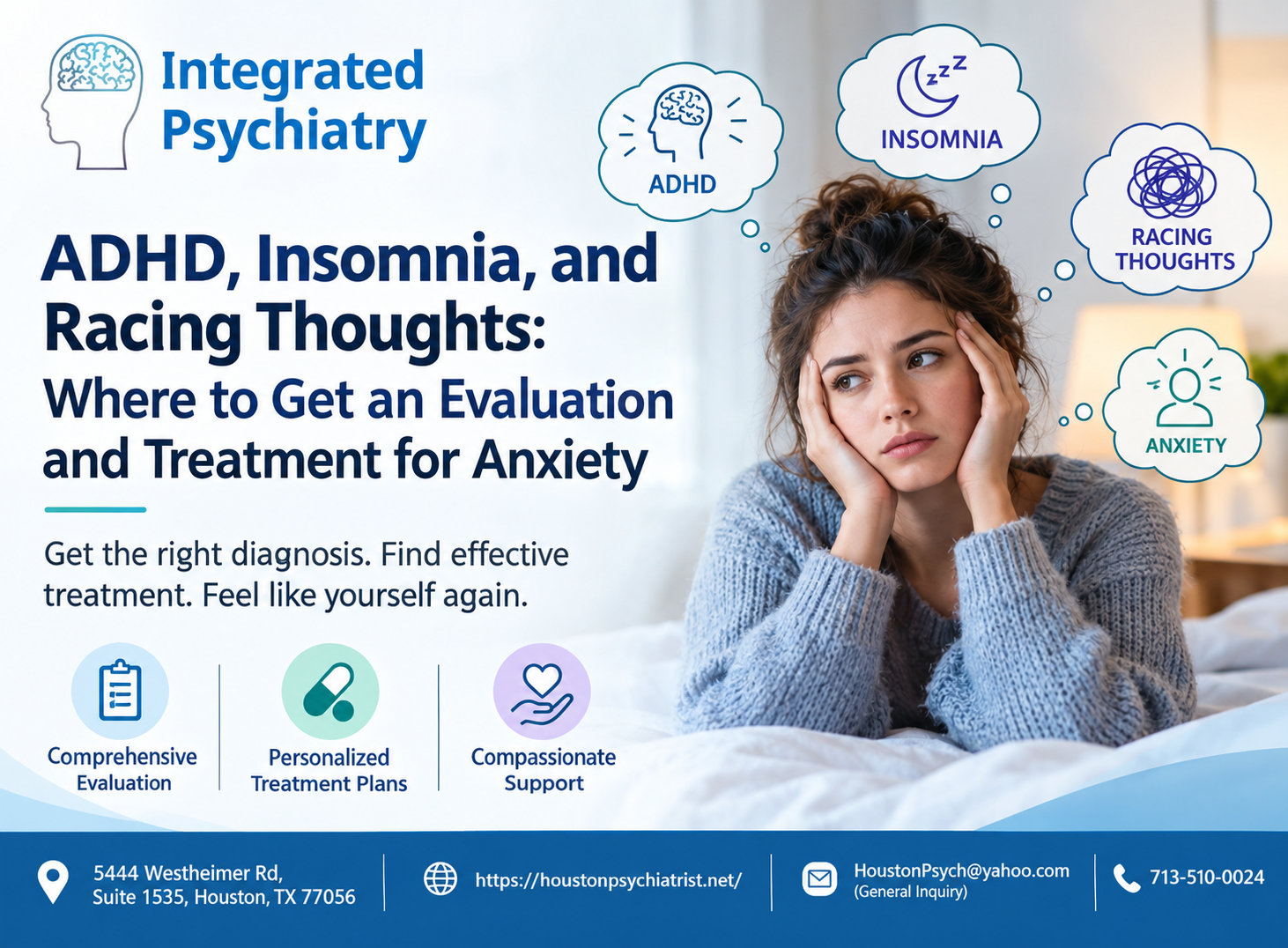
A busy mind at bedtime does not automatically mean you have anxiety, just as difficulty concentrating does not automatically mean you have ADHD. Both conditions can affect sleep, focus and daily functioning, which can make the symptoms hard to separate. An ADHD anxiety evaluation can clarify what you are experiencing before treatment. A second ADHD anxiety evaluation may be useful when symptoms remain unclear.
Why These Symptoms Can Be Hard to Separate
ADHD, anxiety, and sleep problems can produce some of the same experiences. You may struggle to focus, feel restless, have trouble finishing tasks, or lie awake thinking about different things. That overlap can make it difficult to know which symptoms are related to ADHD, which may be linked to anxiety, and which are being made worse by poor sleep.
An evaluation looks at the pattern rather than one symptom by itself. When did the problems begin? Do they occur during the day, or mostly at night? Have they been there since they were little? Do they get worse during stressful times? Questions like these can help clarify what may be contributing to your symptoms.
What ADHD Can Have to Do With Sleep
People with ADHD may find it hard to settle down at night, stick to a consistent sleep schedule, or turn their attention away from whatever is keeping them engaged. This can contribute to ADHD related insomnia and leave you feeling tired the next day.
Sleep loss can then make attention, memory, organization, and emotional regulation more difficult. That does not mean every sleep problem in someone with ADHD is caused by ADHD. It does mean sleep deserves attention when evaluating ongoing concentration or attention concerns.
When Racing Thoughts May Point to Anxiety
Racing thoughts anxiety can feel like your mind is constantly moving from one concern to another. You may replay conversations, worry about what could happen, think through upcoming responsibilities, or find it hard to switch off at bedtime.
If the worry centers around potential problems, uncertainty, or fear, anxiety may need closer evaluation. If your mind jumps between ideas, interests, tasks and unrelated thoughts, the pattern may look different. A clinician can help distinguish these experiences rather than relying on one symptom.
How Poor Sleep Can Affect the Day
Poor sleep can leave you tired, irritable, unfocused, and less able to manage daily responsibilities. If you already have ADHD and anxiety symptoms, insomnia can make both harder to manage.
This is one reason ADHD and insomnia should not always be treated as separate concerns. Looking at your sleep alongside attention, mood and anxiety can give a clearer understanding of what is happening.
What an Evaluation May Cover
An ADHD evaluation usually involves more than asking whether you have trouble concentrating. A clinician may ask about childhood symptoms, school or work functioning, organization, impulsivity, restlessness, and how symptoms affect daily life.
An anxiety evaluation may look at excessive worry, physical symptoms, avoidance, panic, irritability, and how anxiety affects sleep and functioning. Sleep patterns may also be discussed, including,
- when you go to bed,
- how long it takes to fall asleep,
- waking during the night and how rested
- do you feel during the day
A psychiatric evaluation in Houston can bring these areas together rather than assessing each symptom in isolation.
Why the Order of Treatment Can Matter
When several symptoms overlap, it can be tempting to focus on whichever one feels most uncomfortable. But treatment decisions should consider the full pattern.
For example, treating anxiety may help when concentration problems are largely related to worry. In another situation, addressing ADHD may make routines and sleep easier to manage. If insomnia is severe, improving sleep may also make daytime symptoms easier to assess.
There is no single order that works for everyone. ADHD treatment and anxiety treatment should be based on the individual’s symptoms, history, and response to care.
Treatment Can Include More Than Medication
Treatment may involve medication, therapy, behavioral strategies, sleep-related changes, or a combination of approaches. The goal is to address the symptoms affecting your daily life.
If medication is recommended, follow-up is important. Your response, side effects, sleep, anxiety levels, and attention can all help your psychiatrist decide whether the treatment needs to continue or be adjusted.
When to Seek Professional Help
Consider an evaluation if racing thoughts regularly keep you awake, difficulty focusing affects work or school, anxiety interferes with daily activities, or sleep problems persist.
You do not need to determine the diagnosis before making an appointment. That is what the evaluation is for.
Getting the Right Evaluation in Houston
If you are looking for a psychiatrist for ADHD and anxiety, start with a practice that can assess the different symptoms together. An ADHD psychiatrist in Houston can evaluate attention and executive-function concerns, while an anxiety psychiatrist in Houston can assess persistent worry, panic, and related symptoms. Sleep concerns can also be discussed when they affect your functioning.
At Integrated Psychiatry, evaluations can help identify the concerns affecting your mental health and guide an appropriate treatment plan. If sleep problems are a major concern, discussing insomnia treatment in Houston as part of the broader evaluation can also help.
The right starting point is not always treating the symptom that feels most obvious. Looking at when the symptoms began, how they interact, and how they affect your daily life can provide a better basis for treatment. Integrated Psychiatry can help you understand whether ADHD, anxiety, sleep problems, or a combination of concerns may be affecting you.
FAQs
1. Can ADHD cause racing thoughts at night?
It can contribute to difficulty settling down or shifting attention, but racing thoughts can also occur with anxiety and other conditions.
2. Can anxiety make ADHD symptoms worse?
Yes. Worry and poor sleep can make concentration, organization, and daily functioning more difficult.
3. Should insomnia be treated separately?
Not always. Sleep problems can be assessed alongside ADHD and anxiety to determine how they may be connected.
4. Do I need an ADHD diagnosis before treatment?
No. An evaluation can help determine whether ADHD is present and what treatment may be appropriate.