
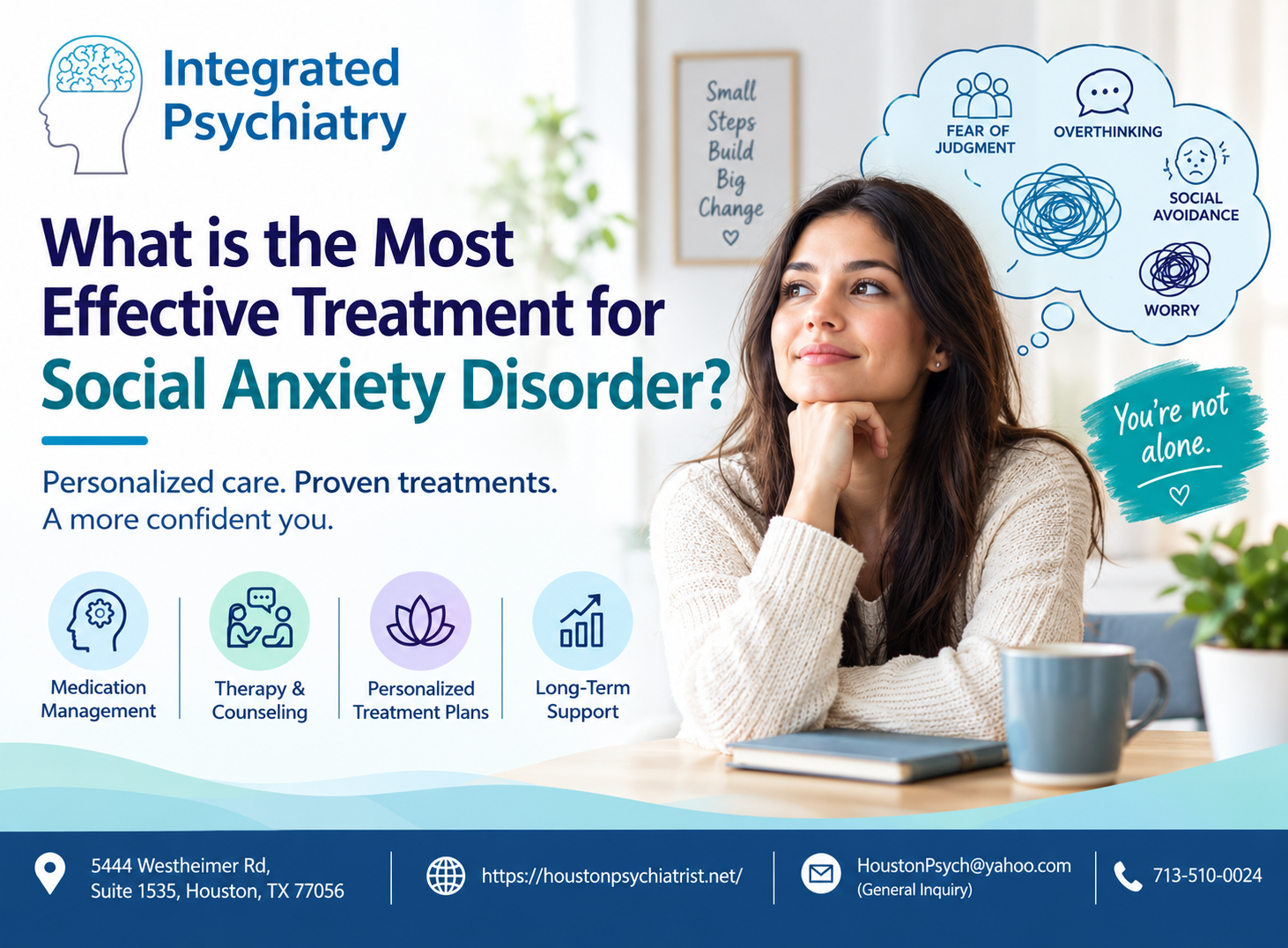
If social situations leave you anxious, uncomfortable, or worried about being judged, you may wonder what treatment actually works. There are several approaches to social anxiety disorder treatment, but choosing between them is not simply a matter of finding the strongest medication or the most popular therapy. The right approach depends on your symptoms, needs, and treatment goals.
What Is the Most Effective Treatment for Social Anxiety Disorder?
No one treatment works for everyone. Some people do well with therapy; some need medication. Some benefit from using both. The choice can depend on your symptoms and how much anxiety is affecting daily life.
Treatment can also change if symptoms improve or the first approach doesn’t help enough. That’s why social anxiety disorder treatment should be reviewed rather than treated as a fixed plan.
How Does Social Anxiety Affect Your Daily Life?
Social anxiety can show up in situations that may seem simple to other people. You might worry about speaking in a meeting, answering a question in class, talking to someone new, making a phone call, eating around other people or being the center of attention.
Anxiety can happen before, during and after the situation. You can spend hours agonizing over what you said or if anyone noticed you were nervous. Some people start avoiding situations altogether, which can affect work, relationships and school.
How Is Social Anxiety Evaluated?
An evaluation is not a set of questions on whether or not you feel nervous around people. A psychiatrist may ask when your symptoms started, which situations make you anxious, what you think might happen and whether you avoid certain situations because of the anxiety.
You may also be asked about sleep, mood, panic symptoms and medications. Anxiety can occur alongside other conditions, so looking at your symptoms together can help your psychiatrist decide what to recommend.
When Can Therapy Help With Social Anxiety?
Therapy may aid you in recognizing those thoughts and behaviors that sustain your social anxiety disorder. Cognitive behavioral therapy is commonly used and can help you notice patterns in the way you think about social situations and work on different ways of responding.
Exposure-based work may also be included. That doesn’t mean being pushed into the hardest situation right away. You may work through situations gradually, starting with something manageable.
For example, someone who avoids making phone calls may start by practicing a simple call before working toward situations that cause more anxiety. The pace can depend on what feels manageable.
When Is Medication Considered?
Medication may be considered when social anxiety is affecting your daily life, is difficult to manage or has not improved enough with therapy. Your psychiatrist may consider your symptoms, medical history, other medications and any other conditions before recommending an option.
Social anxiety disorder medicine treatment is not something you should choose based only on what worked for someone else. Different medications can have different effects and side effects. Your response can help your psychiatrist decide whether to continue or adjust the medication.
Can Therapy and Medication Be Used Together?
Yes. Therapy and medication can be used together when that makes sense for the person. Some people may use medication while working on anxiety through therapy. Others may prefer to start with one approach and see how it goes.
You do not have to use both. The important thing is that the treatment matches your symptoms and is reviewed if it is not helping enough.
What Should a Treatment Plan Include?
A treatment plan for social anxiety disorder should focus on the problems you are actually dealing with. If you are avoiding work meetings, struggling to make phone calls or turning down social plans because of anxiety, those concerns should be part of the conversation.
Your plan may include therapy, medication or both, along with follow-up. If symptoms are still interfering with your life or you are having side effects, your psychiatrist can discuss whether something needs to be adjusted.
When Should You See a Specialist?
You do not have to wait until social anxiety takes over your routine before getting help. If you avoid situations you want or need to be part of, spend a lot of time worrying about social interactions, or find that anxiety is affecting work or relationships, it may be worth getting an evaluation.
A specialist in social anxiety treatment can help you understand your symptoms and talk about treatment options. You do not need to diagnose yourself first- that is what the evaluation is for.
How Do You Know if Treatment Is Helping?
Improvement does not necessarily mean you will never feel nervous around other people. A more useful sign may be that you are doing things you previously avoided. You might speak up in a meeting, make a phone call without putting it off, attend an event, or stop spending hours replaying a conversation afterward.
Your psychiatrist can also look at changes in symptoms, daily functioning and medication side effects. If you are not seeing enough improvement, the approach may need to be changed.
Where Can You Get Social Anxiety Treatment in Houston?
If you find that social anxiety is interfering with your daily life, an assessment can help you learn about your options and select a treatment for social anxiety disorder that works for you. At Integrated Psychiatry, a psychiatrist can review your symptoms and discuss whether therapy, medication or a combination may be appropriate for you.
Follow-up is also important because your needs may change. A treatment that worked well at first may need to be adjusted later. Integrated Psychiatry can review your progress and discuss changes when needed.
The focus should be on finding care that fits your symptoms and helping you handle situations that are important to you.
FAQs
1. Can social anxiety be treated without medication?
Yes. Therapy can be used on its own for some people.
2. How long does treatment take?
There is no set timeline. It depends on your symptoms and how you respond to treatment.
3. Is medication always needed?
Not necessarily. Certain individuals might experience a favorable outcome with therapy alone.
4. What if I don’t get treatment, will my social anxiety go away?
It may still disrupt normal activities and cause additional avoidance.