
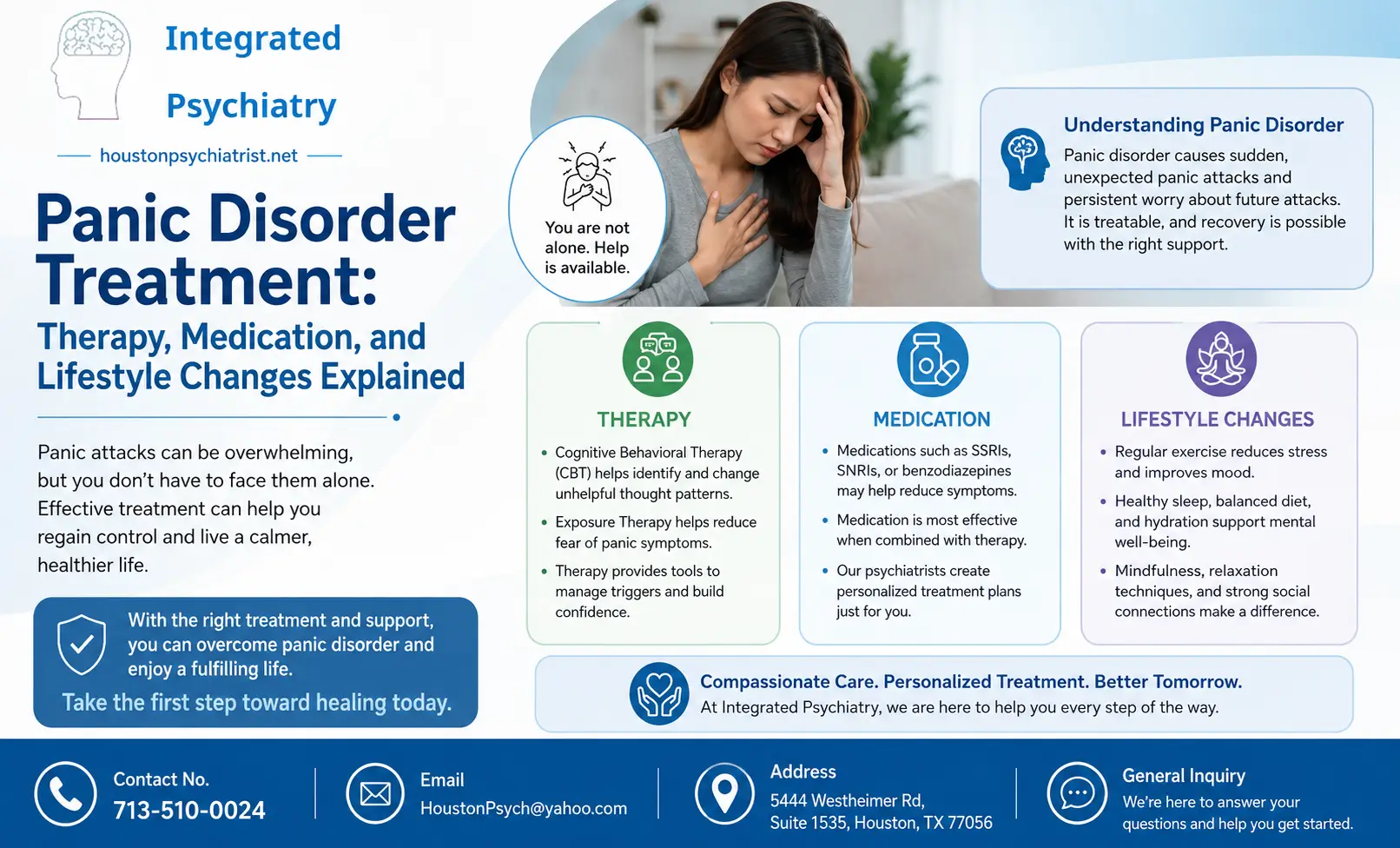
Panic attacks hit differently and can be scary because they often come unexpectedly. Your body reacts hard, your thoughts spiral, and it feels like something bad is about to happen. After enough of these, normal situations start feeling harder to deal with.
Here’s the thing, though- the fear doesn’t stop when the attack stops. A lot of people spend the time in between worrying about when the next one will show up. That worry alone starts changing what they do day to day.
Getting help doesn’t mean gritting your teeth and pushing through it alone. Treatment can involve therapy, medication, lifestyle changes, or some mix of the three, depending on what someone actually needs. Finding the right panic disorder treatment Houston can be a real step toward getting some control back.
What Does Panic Disorder Treatment Involve?
Treatment generally comes down to figuring out why panic is happening, what’s keeping it going, and how to shrink its effect on daily life.
There isn’t one treatment that works for everyone the same way. Some people need therapy front and center. Others do better with medication added into the mix.
Most treatment plans end up combining a few approaches:
| Treatment Approach | What It Focuses On |
| Therapy | Helps you understand panic patterns, fears, and reactions so you can respond differently |
| Medication | Can help manage symptoms and make panic episodes easier to handle |
| Lifestyle Changes | Supports your overall well-being and helps reduce stress triggers |
Stopping the attacks isn’t the whole goal. Getting back to doing normal things without bracing for the next one matters just as much.
How Can Therapy Help With Panic Disorder?
Therapy matters here because it gives you something to understand instead of just being confused by your own body.
During an attack, your body’s alarm system flips on. Heart racing, breathing off, thoughts jumping straight to worst-case scenario.
For a lot of people, the fear of those sensations becomes the actual problem. “What if it happens again?” “What if I can’t handle it this time?” That thinking is often what keeps the whole cycle running.
Understanding Triggers and Panic Patterns
Panic attacks don’t always come with an obvious cause. Sometimes it’s a stressful week. Sometimes there’s no clear reason at all.
Therapy helps pull out patterns that aren’t obvious on the surface- certain situations, thoughts, physical sensations, habits that ramp anxiety up without someone noticing right away.
Someone might realize they’ve been avoiding crowds because of a fear of feeling trapped mid-attack. Just seeing that pattern is usually the first real step toward changing it.
A panic disorder psychiatrist Houston can evaluate what’s going on and point you toward the right kind of care.
CBT and Other Therapy Approaches
Cognitive behavioral therapy, or CBT, is one of the more common approaches used for panic disorder. It looks at how thoughts, feelings, and actions feed into each other.
This isn’t about “thinking positive” until panic goes away. It’s more about seeing how certain thoughts crank fear up and learning a different way to respond when that happens.
Given enough time, a lot of people realize panic symptoms are uncomfortable, sure, but not nearly as dangerous as their brain is insisting in the moment.
When Is Medication Used for Panic Disorder?
Medication helps some people, especially when symptoms are frequent, intense, or getting in the way of daily life.
It’s not always the first thing tried, and it’s rarely the only thing. A mental health professional will usually look at symptoms and history before suggesting anything.
Different medications do different things for different people. Some cut down the intensity of an attack. Some help with the anxiety sitting underneath everything, day to day.
A lot of people searching for panic medication Houston want to know if a pill will just stop the attacks outright. Realistically, medication works best as one piece of a bigger plan, not a standalone fix.
It tends to work better paired with therapy and some lifestyle adjustments than it does on its own.
What Lifestyle Changes Can Support Panic Disorder Treatment?
Lifestyle changes won’t replace actual treatment. But they do affect how your body handles stress in general.
When your body’s already worn down from bad sleep or constant stress, anxiety symptoms tend to hit harder on top of that.
Some examples of things that can help include:
- Maintaining a good sleeping pattern
- Regular exercise and being active
- Staying away from caffeine in case it increases anxiety
- Eating right and hydration
- Resting on very busy days
- Applying grounding techniques when you feel anxious
Not all of them have to be perfect. It’s just about giving your nervous system a little more to work with.
How Do You Find the Right Support for Panic Disorder Treatment Houston?
Finding the right fit takes some time. The best plan is usually one that actually fits your symptoms, your comfort level, and what’s realistic for your life- not a plan pulled off a shelf.
A panic disorder specialist Houston can help sort through what you’re dealing with and what options make sense.
Some people need mostly therapy. Others need medication in there too. A good provider takes time to figure out what’s actually going on instead of running the same playbook on everyone.
At Integrated Psychiatry, care gets built around the person, not just the symptom list. Panic disorder doesn’t look the same in any two people, so the plan usually has to shift to match.
Can Panic Disorder Improve With Treatment?
Living with panic disorder wears people down, especially once fear starts dictating decisions. Avoiding things feels easier in the short term, but it shrinks life over time.
With the right support and panic disorder treatment in Houston, a lot of people do get better at handling panic symptoms and feel more like themselves again.
Progress isn’t always fast. Some people notice a shift pretty quickly. Others take longer to find what actually works for them.
Integrated Psychiatry works with people to explore options and put together a plan built for the long haul.
FAQs
1. What can trigger panic attacks to happen more often?
Stressful periods, big life changes, not enough sleep, or anxiety that’s already running high can all make attacks more frequent. Some people also start linking certain places, thoughts, or physical sensations to panic over time.
2. How do I know if what I’m experiencing is a panic attack or something else?
Racing heart, dizziness, shaking, chest tightness, shortness of breath- these show up in panic attacks but also overlap with other health issues. Talking to a professional helps sort out which one it is.
3. Is there a possibility of relapse after improvement of panic disorder?
Yes, but especially when stressed out. It will generally become easier to manage because of the knowledge and techniques learned for dealing with the triggers.
4. Are panic attacks dangerous for your physical health?
They feel intense, no question, but they’re generally not dangerous. It’s the body’s alarm system going off even though there’s no actual threat around.
5. Under what circumstances should I consult a mental health professional regarding my panic attacks?
Generally, when the attacks interfere with your job, relationships, everyday life, or cause you to miss out on things you wish to do.