
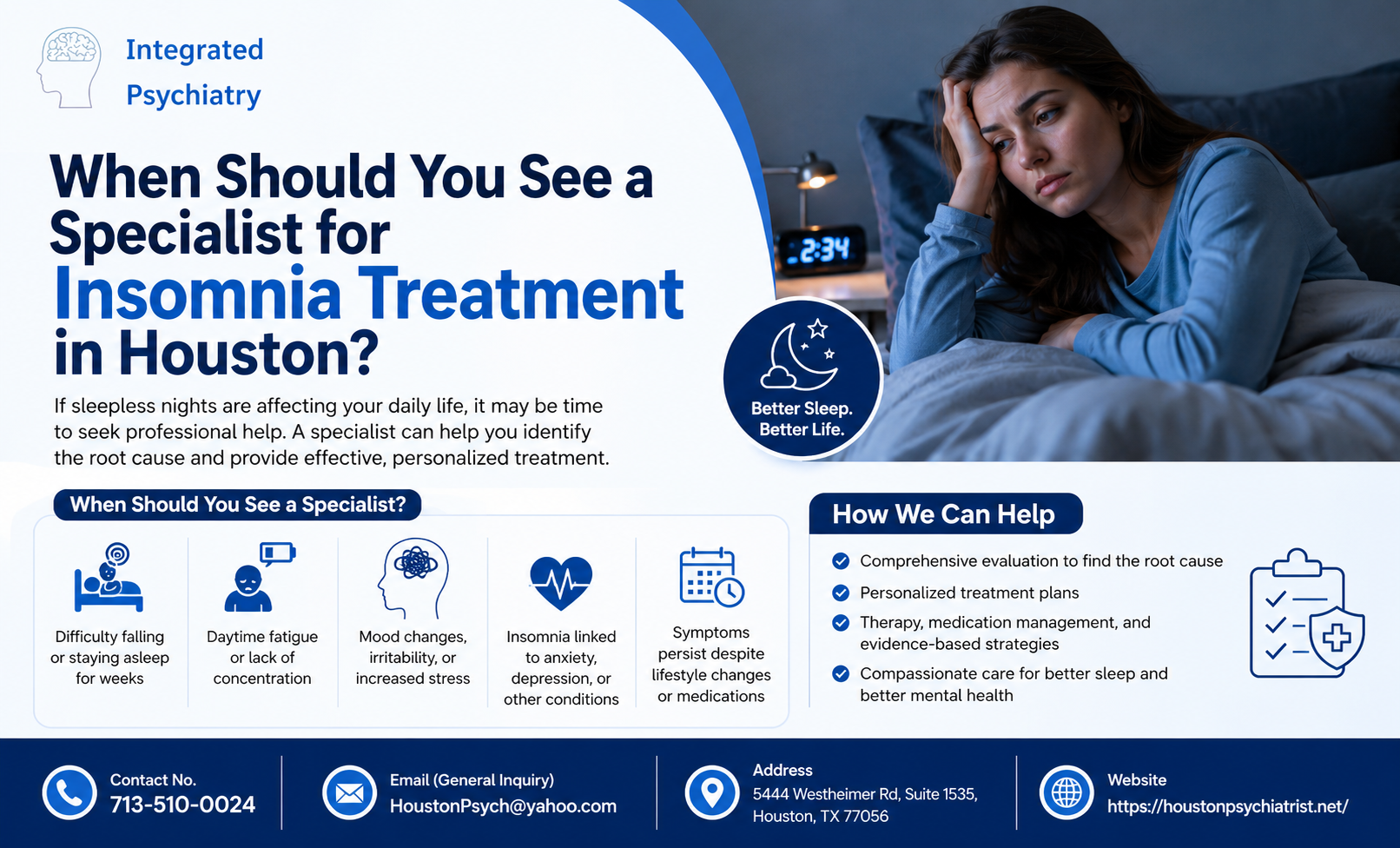
Everyone has trouble sleeping sometimes. The hard part is figuring out when it’s stopped being occasional and turned into something that actually needs attention.
Most people don’t call a specialist after a bad night or two. They wait it out. But if it’s been weeks and sleep is still inconsistent, waiting probably isn’t the answer. In this blog, we’ll cover the signs that it may be time to seek insomnia treatment Houston and why getting the right support can matter more than most people expect.
Is Your Insomnia Becoming More Than Just a Bad Night’s Sleep?
Stress, too much screen time, too much coffee- these can all mess with sleep temporarily. Usually, things settle once the cause is gone.
Persistent insomnia doesn’t work that way. If falling asleep takes forever most nights, or you’re waking up repeatedly, or you’re getting out of bed feeling just as tired as when you got in- that’s a different situation.
When poor sleep starts showing up in your energy levels, your mood, your work, your relationships, it’s probably past the point where a new bedtime routine is going to fix it.
Ignoring it tends to make things harder to sort out later.
7 Signs It May Be Time to Seek Insomnia Treatment Houston
Not every rough night means you need professional care. These signs are different, though.
1. You’ve been struggling to sleep for several weeks
Days of bad sleep are one thing, but weeks are another.
2. You regularly lie awake for long periods
An hour or more to fall asleep on most nights isn’t normal, even if it starts to feel that way.
3. You wake up several times during the night
Broken sleep is still exhausting even if the total hours look fine on paper.
4. You’re tired all the time
Continuous sleep deprivation results in fatigue, a decrease in concentration, and low energy.
5. Your attitude is different
Anxiety, irritability and things that would usually not bother you are all impacts of not enough sleep.
6. You’ve tried improving your sleep without success.
Cutting caffeine, keeping a routine, winding down before bed. If none of it has moved the needle, something else may be going on.
7. Sleep problems are affecting your daily life
Work, relationships, basic functioning. At some point, it stops being something you push through and becomes something that needs addressing.
Does Insomnia Always Look the Same?
Not really. People assume insomnia means lying awake all night staring at the ceiling. That’s one version of it.
Some people fall asleep fine but wake up at 3 AM and can’t get back down. Others sleep the full hours but still feel like they didn’t rest. Some nights are fine, others aren’t- and that inconsistency is its own kind of exhausting because it makes the problem harder to pin down.
Insomnia can also show up differently depending on stress levels, season, or life changes. What it looks like for one person may not match someone else’s experience at all. That’s part of why a personalized evaluation tends to be more useful than general sleep advice.
What Can Cause Chronic Insomnia?
Rarely one thing. Usually, a few factors pile on top of each other.
| Possible Cause | How It Can Affect Sleep |
| Stress and anxiety | Makes it harder to relax before bedtime |
| Depression or low mood | May affect both falling asleep and staying asleep |
| Irregular sleep schedule | Disrupts the body’s natural sleep rhythm |
| Medical conditions | Pain, breathing issues, or other health concerns can interrupt sleep |
| Caffeine or alcohol | Can reduce sleep quality, especially later in the day |
| Poor sleep habits | Inconsistent routines may make falling asleep more difficult |
This is part of why professional evaluation is useful. Treating insomnia usually means looking at more than just the sleep itself.
What Happens When You See an Insomnia Specialist?
Most people assume the first appointment will be a quick conversation ending in a prescription. It’s usually not like that.
A specialist may discuss:
- Your sleep pattern and sleep rituals
- Duration of your condition
- Anxiety, stress, or other mental issues
- Medical history and medication list
- Unhealthy behaviors affecting your sleep
Then, the treatment plan will revolve around your actual issues- not any general guideline used for any patient coming through the door.
What Treatment Options Are Available?
That answer would be individual and depend upon the cause of the disorder. There are some standard recommendations for insomnia management, which you will see among many insomnia treatment near me searches:
- Cognitive Behavioral Therapy for Insomnia (CBT-I)
- Improve Sleep Routine and Sleep Hygiene
- Reduce stress and anxiety
- Medications, when necessary
- Treat other underlying conditions
However, when used together, the combination is much more effective than solely relying on a prescription for sleep.
Can You Get Help Without Visiting a Clinic?
Yes. A lot of people don’t realize virtual care is an option for something like insomnia.
Online insomnia treatment Houston works for people who:
- Have a busy work schedule
- Find traveling to appointments difficult
- Prefer receiving care from home
- Need follow-ups that fit around their routine
Whether virtual or in-person makes more sense depends on your situation. A provider can help figure that out.
How Integrated Psychiatry Approaches Insomnia Care
At Integrated Psychiatry, insomnia isn’t treated as just a sleep problem. Sleep connects to mental health, stress levels, daily habits, and overall well-being- and that’s how it gets approached here.
The focus isn’t only on symptoms. It’s about understanding what’s actually behind them. Anxiety, depression, lifestyle factors, something else- whatever’s contributing gets factored in.
Treatment is personalized because people’s situations are different. Someone searching for insomnia treatment in Texas after months of disrupted sleep has different needs than someone who’s been struggling for a few weeks. The goal is a plan that fits the individual.
The Right Time to Get Help Is Usually Earlier Than You Think
Most people wait a long time before talking to anyone. They figure sleep will sort itself out eventually. Sometimes it does. When it doesn’t, insomnia starts affecting more than just how tired you feel.
If poor sleep has become a regular part of life, guessing at the cause isn’t really a strategy. The right insomnia treatment Houston can identify what’s actually going on and put together a plan that’s built around your specific needs- not a general recommendation.
Integrated Psychiatry works with people on that directly.
FAQs
1. How long should insomnia last before seeing a specialist?
If it’s been several weeks and sleep is still a problem- especially if it’s affecting work, mood, or daily functioning- professional advice is worth seeking.
2. Can stress alone cause insomnia?
Yes, stress is one of the more common triggers. But persistent insomnia usually involves more than one contributing factor, which is why evaluation helps.
3. Does everyone with insomnia need medication?
No. Treating the cause through lifestyle changes, behavioral therapy or an underlying condition is usually best – medication isn’t automatically the answer.
4. Is treatment for insomnia effective when provided online?
For many people, yes, evaluation, treatment, and support can be delivered online for those who choose this method.
5. What should I expect during my first appointment?
Mostly questions. Sleep habits, medical history, daily routine, what’s been going on, and for how long. Treatment discussion usually comes after that initial picture gets filled in.