
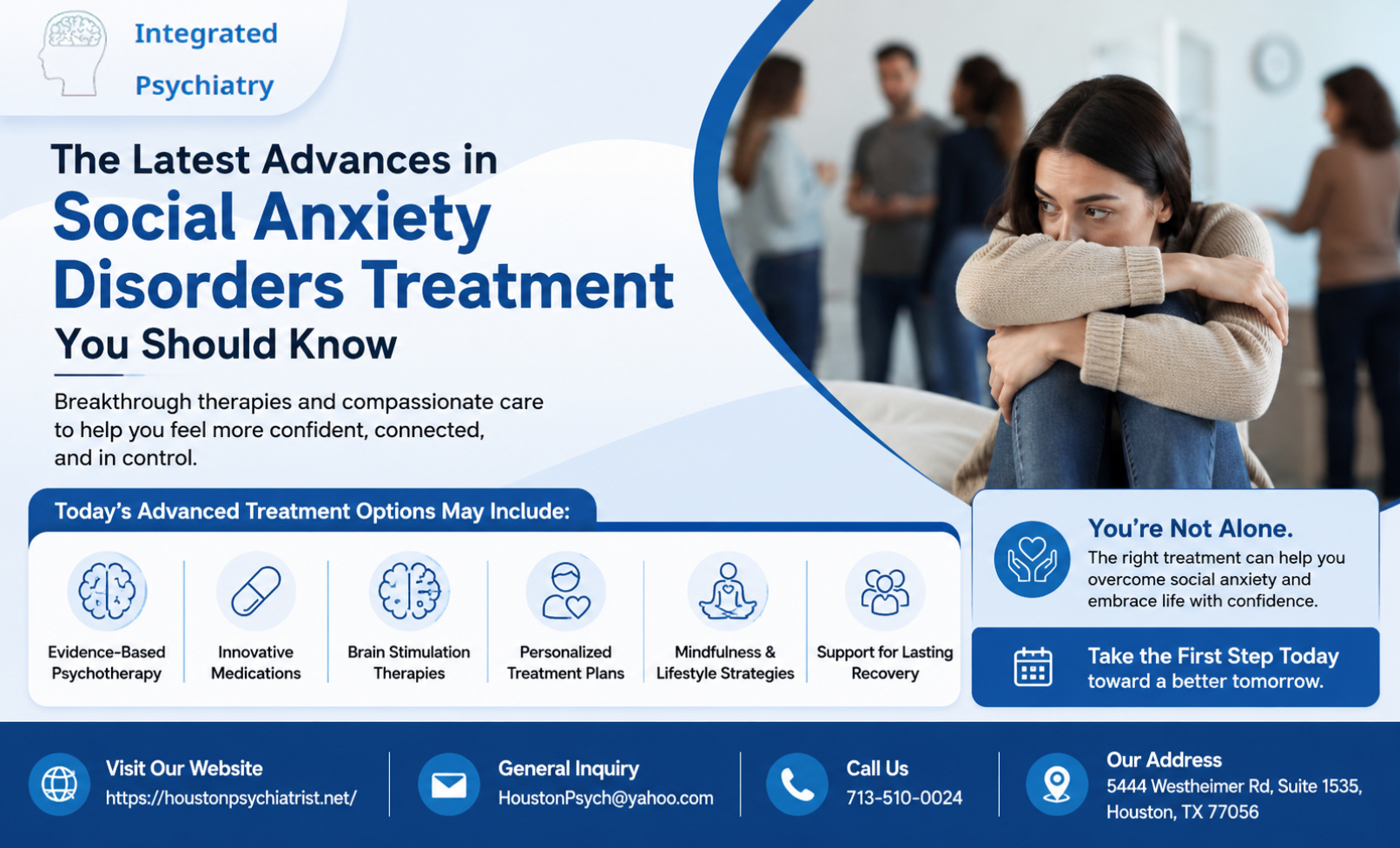
Social anxiety isn’t new, but the way it gets treated has shifted a lot over the years. Researchers keep learning more about how anxiety actually works and why it looks different from person to person, and treatment is starting to reflect that- less one-size-fits-all, more built around the individual.
The conversation around treatment used to be fairly narrow. Now there are more options on the table, a better sense of what actually works, and more attention paid to fitting care to the person rather than the diagnosis. Not every new approach suits everyone, obviously.
But there’s more room to choose than there used to be. This blog walks through some of the latest developments in social anxiety disorders treatment and what they could mean for people looking for support.
Why Has Social Anxiety Treatment Changed So Much in Recent Years?
Social anxiety has always been more complex than simply feeling shy. Some people struggle to speak in meetings. Others avoid parties, phone calls, or even ordering food because they worry about saying the wrong thing. The symptoms look different from person to person, but they show up in daily life in similar ways.
A Better Understanding of Individual Differences
Researchers have spent the last decade digging into how anxiety develops and why people respond so differently to treatment. Building plans around one person, not one condition, is where the field has landed.
A Shift in How Providers Think About Care
“What usually works for social anxiety?” used to be the default question. Now it’s closer to “what’s likely to work for this specific person?” A small shift in phrasing, maybe, but it’s changed how treatment actually gets planned.
The Role of Technology
Virtual appointments. Better assessment tools. Progress tracking that doesn’t require waiting three months for a check-in. Providers can now adjust course mid-treatment instead of running the same plan for months without knowing if it’s landing.
What’s New in Social Anxiety Disorders Treatment Today?
Treatment hasn’t changed overnight, but a handful of shifts have made care more flexible and patient-focused.
| Recent Development | Why It Matters |
| Personalized treatment plans | Care is based on individual symptoms, goals, and progress |
| Better use of Cognitive Behavioral Therapy (CBT) | Therapy techniques continue to evolve for different social situations |
| Improved medication management | Medication decisions are becoming more individualized |
| Telepsychiatry | Easier access to specialists from home |
| Regular treatment reviews | Care plans can change as progress changes |
| Combined treatment approaches | Therapy, medication, and lifestyle changes can work together |
People are more involved in their own treatment decisions now- what’s worked before, what hasn’t, what they actually want out of care. Access has changed too. Someone who once had to cross town for every appointment can log into telehealth from their couch, and for a lot of people that’s the difference between getting care and not.
Are Medications Becoming More Personalized?
Medication is still part of social anxiety disorder medicine treatment. It’s just not treated as the whole answer anymore.
Providers weigh several things before recommending it:
- How severe the symptoms are
- How long they’ve been present
- Whether therapy has been tried before
- Other mental or physical health conditions
- Personal preferences and treatment goals
None of this runs off a standard checklist.
Medication also gets watched more closely than it used to. Side effects flare up, symptoms stall- the plan shifts. People used to stay on the same regimen for long stretches with barely a check-in. That’s not really the norm anymore.
Pairing medication with therapy is common too, rather than leaning on medication alone. Thought patterns, avoidance behaviors, and coping skills- working through those alongside medication tends to hold up better long-term.
Why Combining Different Treatments Often Works Better
Social anxiety rarely responds to one single change. Most treatment plans reflect that now, pulling from multiple approaches rather than banking on just one.
A plan might include:
- Cognitive Behavioral Therapy (CBT)
- Medication when appropriate
- Exposure-based techniques
- Stress management strategies
- Lifestyle adjustments
- Regular follow-up appointments
Therapy chips away at anxious thought patterns. Lifestyle changes handle sleep, stress, and general well-being. Follow-ups catch what’s working and what isn’t, early enough to actually do something about it.
Have Treatment Options Changed for Children and Teenagers?
Yes- and it’s one of the bigger shifts in recent years.
Anxiety doesn’t always look the same in kids as it does in adults. A child might avoid speaking in class, skip social activities, or complain of stomach aches before school. Rarely do they say “I feel anxious” outright.
Children’s social anxiety disorder treatment has adjusted accordingly. Parents or caregivers get pulled in. Sometimes schools too, so the support doesn’t just live inside a clinic.
Reducing anxiety isn’t really the end goal on its own. Building confidence in everyday situations, picking up coping skills that stick as kids grow- that’s closer to what treatment is aiming for.
Where Do Natural Approaches Fit Into Treatment?
A lot of people look into social anxiety disorder natural treatment before ever seeing a professional. Healthy habits genuinely help, but they work better as support for a bigger plan than as a replacement for one.
Some commonly recommended habits include:
- Keeping a regular sleep schedule
- Exercising several times a week
- Practicing mindfulness or breathing exercises
- Reducing caffeine if it worsens anxiety
- Spending gradual, manageable time in social situations instead of avoiding them completely
None of this erases social anxiety by itself. It does tend to make everything else work better.
How Integrated Psychiatry Approaches Social Anxiety Care
At Integrated Psychiatry, treatment starts with the person, not the diagnosis. Two people with social anxiety can have completely different experiences- that’s the whole case for personalized care.
Plans get built around each person’s symptoms, daily challenges, goals, and medical history. Therapy, medication management, sometimes both- with regular check-ins to see how things are actually going.
Better Treatment Starts With Finding What Works for You
No single new therapy or medication explains the biggest shift in social anxiety treatment. It’s the move toward personalized care. Providers now have more tools to fit treatment to the person instead of expecting one approach to work for everyone.
If social anxiety has started affecting your work, relationships, education, or everyday routine, it’s worth talking to a mental health professional. The sooner that conversation starts, the sooner treatment options that actually fit your life come into view.
At Integrated Psychiatry, our focus while providing social anxiety disorders treatment is on helping people understand their options and building treatment plans that are evidence-based and practical for everyday life.
FAQs
1. What is regarded as the most efficient treatment for SAD?
CBT is highly suggested and may involve the use of medication, depending on the specific requirements.
2. Is medication necessary for all patients suffering from social anxiety disorder?
Not necessarily. Some individuals will respond well to therapy alone, and some will require both therapy and medication.
3. Is it possible to treat social anxiety among children?
Indeed, early therapy is effective for children who have social anxiety disorder.
4. Is it sufficient to use natural treatment in cases of social anxiety?
Natural treatment can serve as an addition to medical treatment, but not as an alternative.
5. How long does it take to be treated?
It depends on several factors, including symptoms’ severity, type of treatment, etc.