
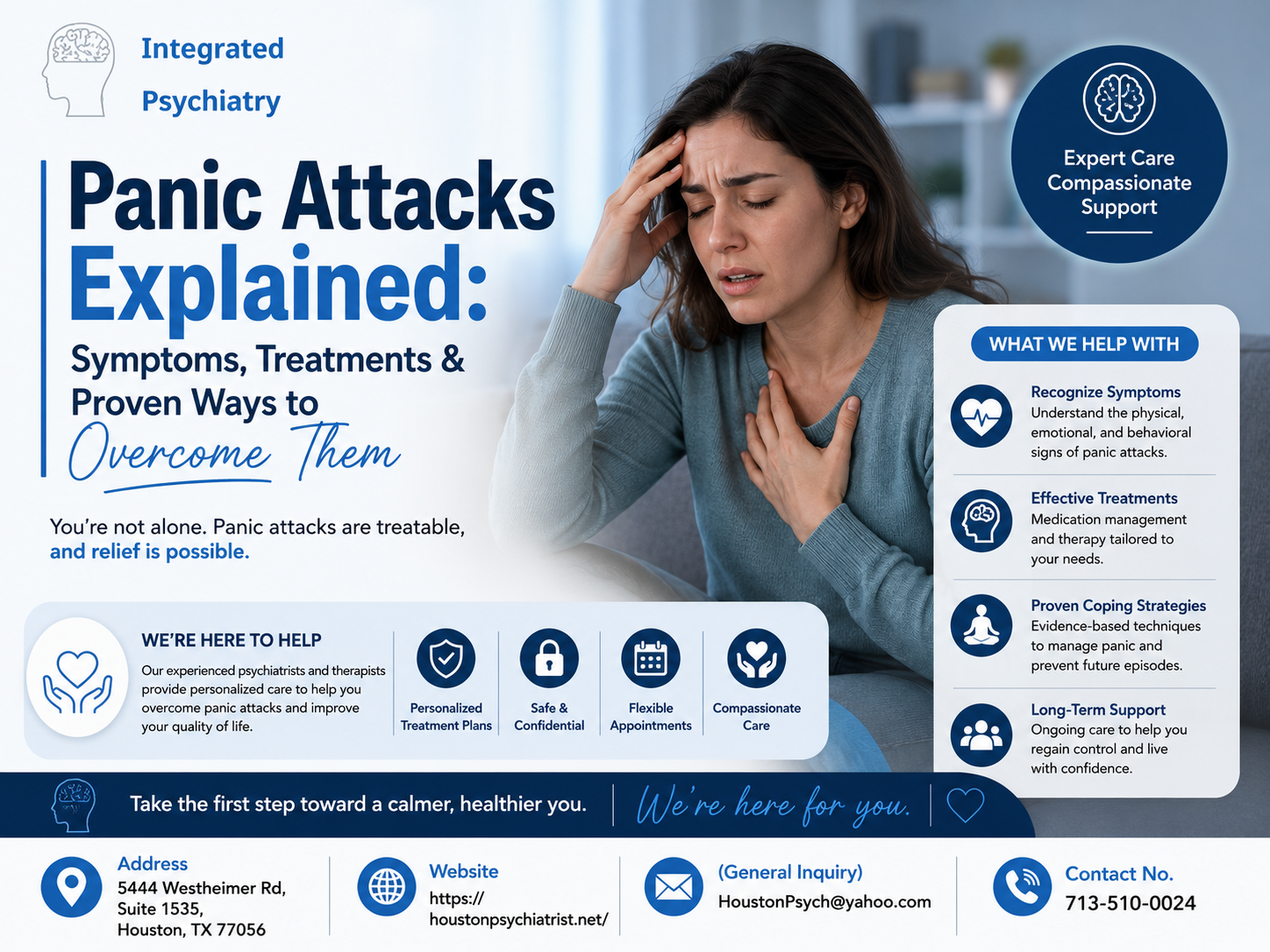
Have you ever had an episode where your heart races, you feel dizzy, or you have difficulty breathing while experiencing intense fear? While this sounds like a scary situation, it could be a result of a panic attack and not a life-threatening condition.
In spite of the fact that panic attacks can occur unexpectedly, there are treatments that can minimize the number of panic attacks and improve your quality of life. For those seeking information on panic disorder treatment Houston, knowing the symptoms and possible treatment can help in getting the right support as and when needed.
What Stands as a Panic Attack?
A panic attack can be defined as the sudden episode of intense fear or physical discomfort that hits without an obvious external cause. A single panic attack can happen normally to anyone, but when they become recurring and unexpected, and the fear of having another one starts shaping how you live, that’s when it moves into panic disorder territory.
That distinction matters. A panic attack is an event. Panic disorder is a mental health condition built around those events repeating, along with the anticipatory anxiety that develops between them. When that pattern takes hold and starts affecting daily life, panic disorder treatment Houston can help identify what’s driving it and what support actually fits the situation.
What Are the Common Symptoms of a Panic Attack?
Panic attacks tend to peak fast, often within minutes, which is part of what makes them so disorienting. The physical symptoms in particular can feel serious enough to resemble something else entirely.
The signs that one may experience include:
- Pounding heartbeats
- Pain or discomfort in chest area
- Breathing problems
- Sweating/chills
- Shaking or trembling
- Dizziness
- Nausea
- Tingling sensation
- Feeling of being detached from reality
- Fears of losing control/dying
If you are the one experiencing these symptoms for the first time and they are quite serious, it is essential to undergo some medical assessment in order to exclude other possible health conditions.
What Causes Panic Attacks?
The reasons for a person having panic attacks can vary. Panic attacks normally arise out of a combination of various biological, psychological, and environmental factors.
These include:
- History of anxiety and panic disorder among family members
- Prolonged stress or any big change in life
- Traumatic events in the past
- Any other underlying mental illness such as anxiety disorders
- Medical issues and drugs
- Excessive caffeine or stimulant use
Identifying these factors helps a mental health professional to build a treatment plan that addresses more than just the surface symptoms.
How Are Panic Attacks Treated?
The choice of the right treatment will depend on the number of attacks, their severity, and the way they impact one’s life. The majority of people require a tailored treatment strategy rather than a standard treatment modality.
The treatment options may include:
Psychotherapy: CBT is one of the widely employed treatment strategies for helping individuals realize how they think and react differently to their symptoms.
Medications: If you have symptoms often or those symptoms seriously impede your daily activity, a psychiatrist may recommend taking panic medications Houston. In some cases, panic disorder medications Houston may be helpful in controlling the symptoms.
Making lifestyle changes: You should try to exercise regularly, sleep well, manage stress, and avoid excessive consumption of coffee.
Continued psychiatric care: By consulting with a panic disorder psychiatrist in Houston, treatment can be adjusted depending on your improvement.
What Can You Do to Reduce Future Panic Attacks?
Professional treatment does the heavy lifting, but daily habits matter too — both for long-term recovery and for building confidence in managing symptoms when they arise.
Helpful strategies include:
- Learn to identify your personal triggers before they escalate
- Practice slow breathing or grounding techniques during stressful moments
- Keep a consistent sleep schedule rather than letting it vary significantly
- Exercise regularly; it helps regulate the stress response over time
- Reduce caffeine and other stimulants if they seem to worsen symptoms
- Stick with your treatment plan and show up to follow-up appointments
None of these prevent every panic attack. But together they improve how manageable symptoms feel and reduce how much ground needs to be made up after a difficult episode.
When Should You Seek Professional Help?
Occasional anxiety is part of life. Recurring panic attacks are a different matter and shouldn’t be left to manage on their own.
Professional support is worth pursuing if you:
- Experience frequent or unexpected panic attacks
- Spend significant time worrying about when the next one will happen
- Start avoiding places or activities because of fear
- Notice panic symptoms affecting work, relationships, or daily responsibilities
If you’re searching for panic attack treatment Houston or a panic disorder specialist Houston, an evaluation helps determine whether what you’re experiencing is panic disorder and what treatment approach fits best.
Finding Panic Disorder Treatment in Houston
The right provider makes a real difference in how treatment goes. Look for a psychiatrist who conducts proper evaluations, builds individualized treatment plans, and maintains consistent follow-up- rather than offering a generic approach that doesn’t account for how differently panic disorder presents between individuals.
If you’re looking for panic disorder treatment Houston TX, or support for panic disorders Houston TX, Integrated Psychiatry provides personalized psychiatric care designed around your specific symptoms and treatment goals rather than a standard program.
Regaining Confidence Starts with the Right Support
Panic attacks can feel overwhelming, but they’re treatable. Understanding your symptoms, recognizing what tends to trigger them, and getting proper professional support are what move things forward.
With the right care and a treatment plan built around your actual situation, managing panic disorder and getting back to daily life with less fear is genuinely achievable for most people.
FAQs
1. What’s the difference between a panic attack and panic disorder?
Panic attacks consist of a sudden rush of fear and anxiety, while panic disorder entails repetitive panic attacks along with persistent anxiety about having more.
2. Can panic attacks go away without treatment?
Isolated attacks sometimes don’t return. But recurring attacks should be properly evaluated- leaving them unaddressed tends to allow the pattern to entrench further rather than resolve on its own.
3. Is it always required to use medication for panic attack treatment?
It is not always so. For some people, only therapy and some other lifestyle changes are enough. However, some other people need medication together with other measures. This really depends on the nature of symptoms and response to various treatments.
4. How long does it take to treat panic disorder?
The treatment duration depends on many factors, such as the degree of severity of the disease and the method used for treatment. Follow-up is what makes the treatment effective all the time.
5. At what stage should I visit a psychiatrist for panic attacks?
When such attacks occur often or interfere with your activity and prevent you from carrying out your usual routine.