
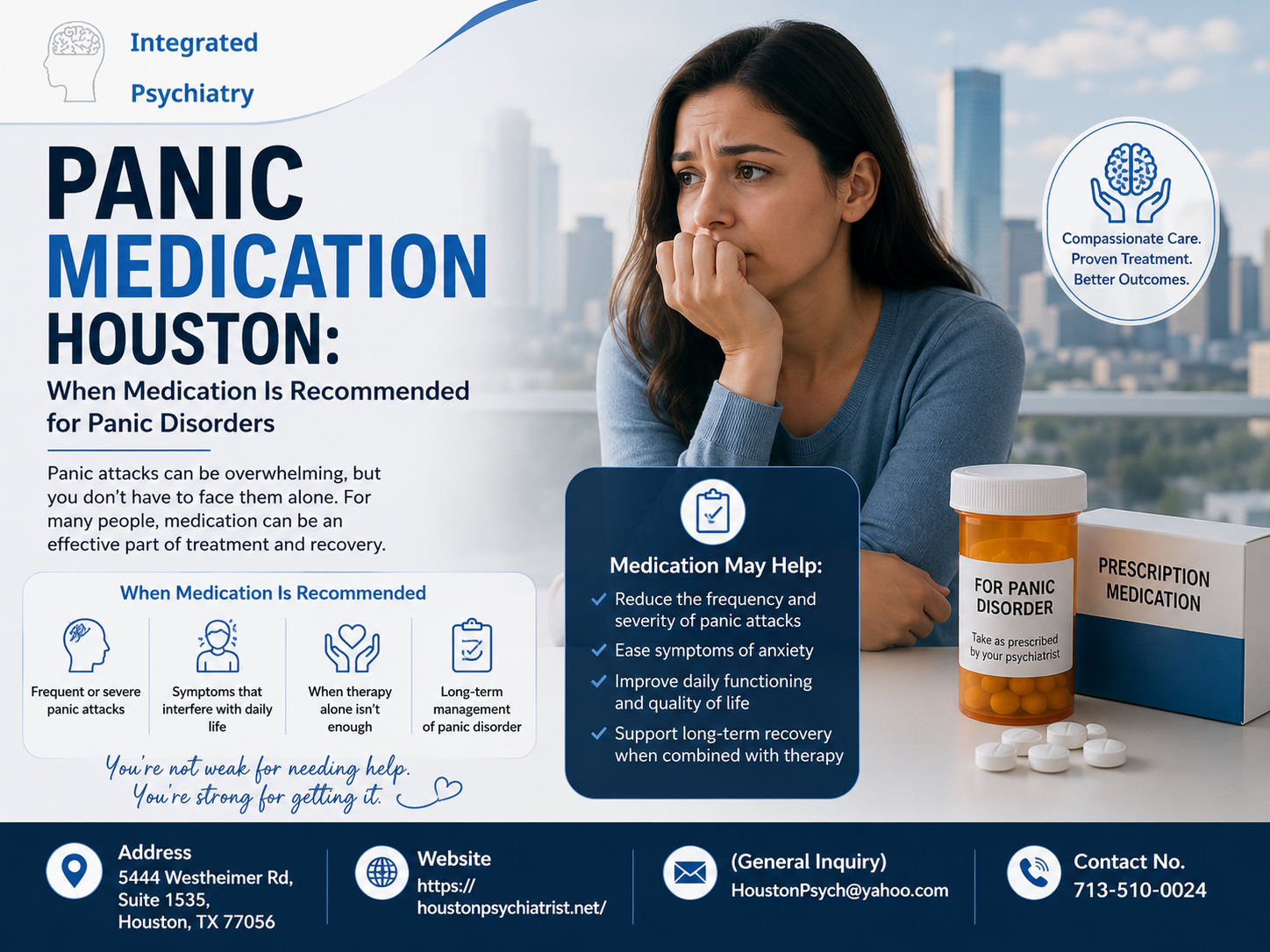
A panic disorder doesn’t just mean feeling anxious sometimes. It means ordinary situations start carrying a weight they shouldn’t- the fear of another attack, the routines reorganized around avoidance, the physical symptoms that arrive without warning and feel completely out of proportion to what’s happening.
For some people, medication becomes an important part of getting that under control. If you’re looking into panic medication Houston, understanding when it’s actually recommended and how it fits into broader treatment helps you go into those conversations with your provider better prepared.
When Do Panic Attacks Become a Panic Disorder?
Anxiety and fear are normal. The difference with a panic disorder is that it features recurring panic attacks that come unexpectedly, severely, and eventually impact the way of life of the individual.
Indicators that point towards a medical intervention being necessary for a patient suffering from panic symptoms:
- Recurrent panic attacks with no specific trigger
- Being constantly afraid of experiencing a new attack in the future
- Avoidance of certain places or situations due to the fear of a possible attack
- Difficulties at work, school, or dealing with other responsibilities
- Physical signs such as racing heartbeat, problems with breathing, and feeling dizzy, which truly scare the individual
Psychiatric evaluation helps decide what type of treatment will be appropriate for the particular case.
How Can Medication Help Manage Panic Disorder Symptoms?
Medication doesn’t eliminate emotions or flatten normal stress responses. What it can do is reduce how intense and how frequent panic symptoms are, which for some people is what makes everything else possible.
Depending on what someone needs, medication may help:
- Reduce the severity of panic attacks
- Lower the baseline anxiety that sits between episodes
- Make daily functioning feel less precarious
- Make it easier to actually engage with therapy
- Support longer-term symptom management
For many people, medication works best alongside therapy and practical coping strategies rather than as a standalone solution. A personalized approach addresses both the immediate symptoms and what’s driving them.
What Types of Medications Are Used for Panic Disorders?
The right medication depends on symptom severity, health history, and what the person is trying to achieve. A psychiatrist works through those factors before making any recommendation.
Some common techniques are:
Antidepressants
Antidepressants work by controlling the brain’s chemical reaction that leads to the occurrence of anxiety and panic disorders. Antidepressants are the best choice when looking for long-term solutions as opposed to treating symptoms of anxiety and panic.
Anti-anxiety medications
At times, some medications are employed depending on the situation of the particular patient. These are given only under supervision.
Combined methods
Taking medication together with other methods like therapy and lifestyle changes leads to better results than just one component. Regular follow-up is what allows adjustments to be made as treatment progresses.
Is Medication the Only Treatment for Panic Disorder?
No, and for many people it isn’t even the primary one. Medication is one tool among several, and the right combination depends on the individual.
Treatment approaches that are commonly used alongside or instead of medication:
Cognitive Behavioral Therapy (CBT): Helps people understand the thought patterns connected to panic and build healthier responses to them over time.
Breathing and relaxation techniques: Practical strategies for managing the physical symptoms when they arise.
Lifestyle adjustments: Sleep, exercise, and stress management habits all affect how the nervous system handles pressure and, by extension, how panic disorder presents.
Ongoing psychiatric care: Regular appointments let the treatment plan evolve as symptoms change rather than staying fixed at the starting point.
The goal isn’t just fewer panic attacks. It’s feeling more capable of handling situations that previously felt impossible.
What Should You Expect When Starting Panic Medication?
Starting medication raises reasonable questions- how it works, when things might shift, what the process actually looks like. It usually begins with a thorough evaluation rather than a quick prescription.
During that appointment, your provider will likely cover:
- How often panic attacks are happening and how severe they are
- How symptoms are affecting daily life specifically
- Medical and mental health history
- What’s been tried before and how it went
- What you’re actually hoping treatment will change
From there, a treatment plan gets built- medication, therapy, or both- with follow-up appointments to track how things are going and adjust when needed.
How Does a Psychiatrist Decide If You Need Panic Medication?
Medication isn’t the answer for everyone dealing with panic symptoms. A psychiatrist looks at the full picture before making that recommendation.
Factors that typically shape the decision:
- How frequent and severe the panic attacks are
- How significantly symptoms are interfering with daily life
- Previous treatment experiences and how they went
- Overall emotional and physical health
- What the person actually wants from treatment
Working with a panic disorder psychiatrist Houston means those decisions are based on your specific situation, not a generic protocol applied to anyone who walks in describing panic attacks.
A panic disorder specialist Houston can also help clarify what the different treatment options actually involve and what realistic expectations look like for each.
Finding the Right Panic Disorder Care in Houston
Good care for panic disorder goes beyond receiving a prescription. It involves understanding what’s driving the symptoms and building a treatment plan that actually fits the person.
When researching panic disorder treatment Houston, consider the provider that offers:
- Comprehensive psychiatric evaluation instead of brief evaluation
- Recommendations based on the needs of the individual
- Medication when necessary
- Evidence-based treatment in the process
- Regular follow-up instead of one-time visits
If you’re seeking panic disorders Houston TX, or panic disorder treatment Houston TX, Integrated Psychiatry can be considered for customized psychiatric services emphasizing symptom recognition and treatment options.
Getting Support for Panic Disorder Starts with the Right Care
Living with recurring panic attacks is exhausting in a way that’s difficult to explain. The attacks themselves are distressing enough, but the anticipation, the avoidance, the way it quietly reshapes daily life, adds up over time.
Effective panic medication Houston treatment changes that. Medication helps some people significantly, particularly when symptoms are severe enough that other strategies haven’t moved things far enough on their own.
We at Integrated Psychiatry believe in providing personalized evaluation and treatment of panic disorder so that the affected person can identify an appropriate strategy for coping with it. If done with the help of professional guidance, many patients can make significant progress in this direction.
FAQs
1. Does medication help with panic disorder?
Yes, it may help some people lower the intensity and frequency of their panic attacks. Whether medication is needed in a certain case is determined individually.
2. Under what circumstances does a psychiatrist prescribe medication for panic disorder?
In cases when attacks occur often and strongly interfere with a person’s normal functioning or do not respond to any other methods of treatment.
3. Can panic disorder be treated without medication?
Yes. Therapy, coping strategies, and lifestyle changes work well for some people. Others do better with medication. It depends on the individual.
4. How long does panic medication take to work?
The timeline varies by medication and by person. Regular follow-up appointments are what allow the approach to be adjusted based on how things are actually going.
5. Should I see a panic disorder specialist in Houston?
If panic symptoms are affecting your daily life in meaningful ways, working with a qualified mental health professional is the right next step.