
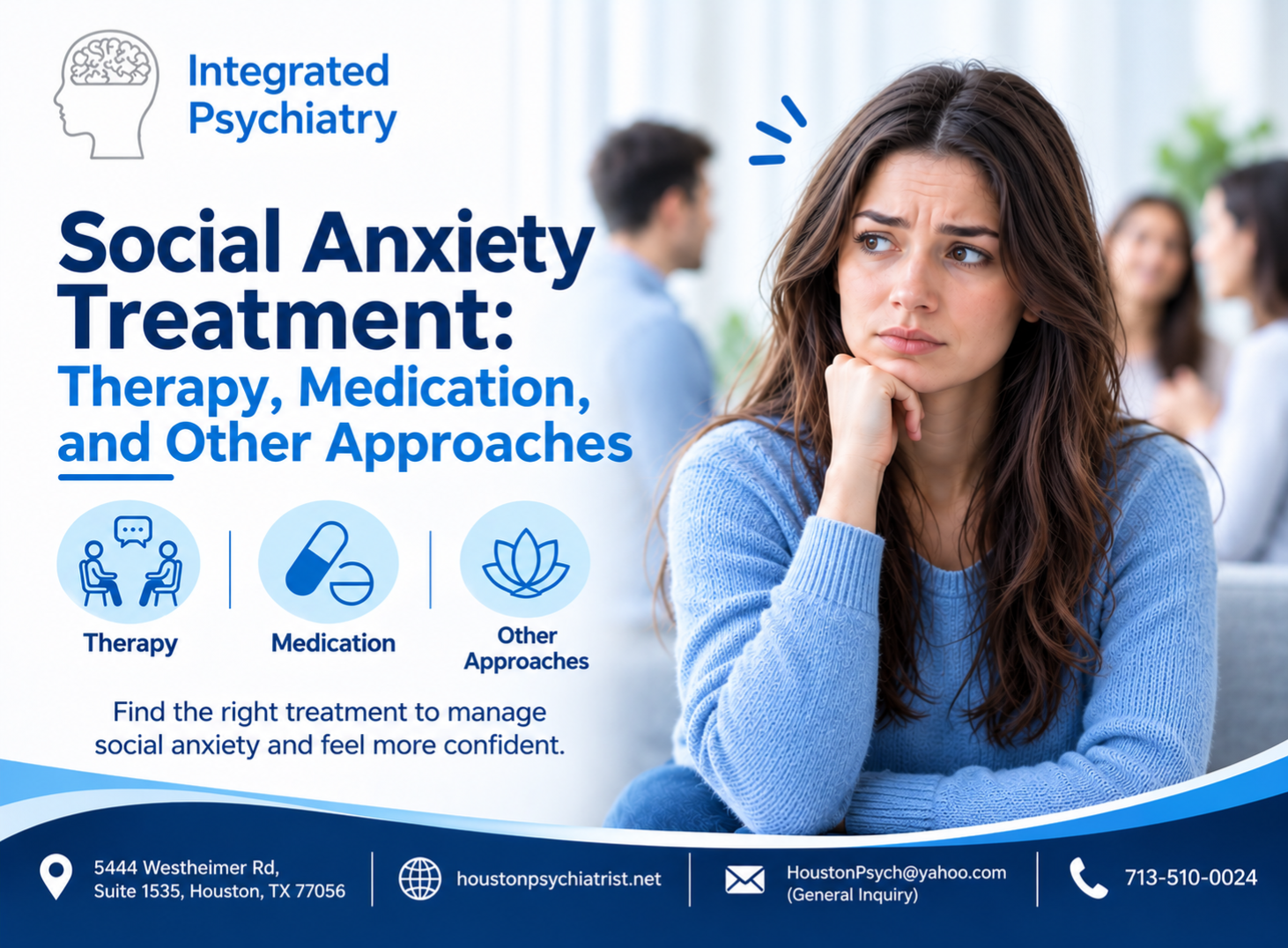
If you often feel anxious in social settings, you might start to avoid things you once felt comfortable with, like talking with others, meeting new people, and participating in group activities. With the right support, social anxiety can be treated. There are lots of treatment options, like therapy, medication, and other ways to help manage your day-to-day interactions.
Understanding the Main Social Anxiety Treatment Options
The correct treatment will depend on your symptoms, personal preference, and medical history. Some people will receive a combination of psychotherapies and/or medication. Below is a summary of the main social anxiety treatment options available.
| Treatment approach | What it involves | Its role in treatment |
| Cognitive Behavioral Therapy (CBT) | Identifying and changing unhelpful thoughts and behaviors. | Helps people respond differently to anxiety-provoking social situations. |
| Exposure-based therapy | Gradually facing situations that trigger anxiety through structured exercises. | Helps reduce avoidance and build confidence through practice. |
| Medication | Prescription medicines, including certain antidepressants. | May help manage symptoms when medication is appropriate. |
| Guided self-help | Working through CBT-based materials with professional support. | Provides a structured way to practice techniques outside regular therapy sessions. |
These approaches are not interchangeable, and the right social anxiety treatment will depend on individual needs. The National Institute of Mental Health (NIMH) has more information about social anxiety treatment and available therapies.
How Is the Right Treatment Approach Decided?
The treatment for social anxiety disorder will be tailored to suit your individual needs. For example, if you are avoiding meetings at work, we might have different goals than if you mainly struggle to meet new people.
During your assessment, the mental health professional will consider:
- What symptoms you are having and what situations trigger your social anxiety?
- How is your anxiety impacting your daily life? Are you struggling with work, education, relationships, or everyday tasks?
- Have you had any previous treatments for your anxiety, such as therapy or medication, and how helpful have these been?
- Do you have any other mental health issues, medical issues, or medications to consider?
- Are you more comfortable beginning treatment with therapy, discussing medication, or trying another supported option?
These details help guide treatment decisions. They also give the provider a clearer sense of what the person wants to work towards.
What Other Approaches Can Support Social Anxiety Treatment?
It is important to have therapy and medication; however, it can be helpful to practice using practical methods to help improve your social situations.
Gradual exposure
Avoiding situations that cause you anxiety can make everyday activities difficult to cope with. With guidance from your therapist, you can gradually practice facing these situations.
For example, if you feel uncomfortable speaking within a group, you could try speaking within a conversation with just one person you know. Later, they could work towards speaking in a small group or joining a meeting.
The steps should be planned around the person’s treatment goals. Exposure-based work isn’t about forcing someone into an overwhelming situation without preparation.
Guided Self-Help
CBT-based self-help materials can support social anxiety therapy by providing exercises for recognizing unhelpful thoughts and practicing different responses. Guided self-help includes support from a trained professional, rather than relying only on independent reading or online resources.
NICE includes CBT-based supported self-help among the treatment options for adults with social anxiety disorder who don’t want individual CBT.
Acceptance and Commitment Therapy (ACT)
Acceptance and Commitment Therapy (ACT) looks at the problem differently by encouraging you to accept and make room for negative thoughts without trying to eliminate them while continuing to do things that are meaningful to you.
NIMH lists ACT as another psychotherapy option for social anxiety disorder, with a growing body of research behind it.
How Can You Track Progress During Treatment?
Progress doesn’t always mean feeling completely comfortable in every social situation. Sometimes improvement shows up more clearly through everyday behavior.
Are you:
- Taking part in activities you previously turned down?
- Spending less time worrying about what to say beforehand?
- Getting involved more easily in meetings, discussions or group activities?
- Spending less time worrying about what people might have thought after an interaction?
- Feeling that your anxiety is less of a problem when working with others, in relationships or carrying out everyday tasks?
Structured symptom rating scales may be used by the provider to monitor changes. NICE recommends involving people with social anxiety in reviewing how well their treatment is working.
When Should Your Treatment Plan Be Reviewed?
If your symptoms aren’t improving, side effects are hard to manage, or you’re struggling to stick with the plan, bring these concerns to your provider.
A review may involve talking about whether the current approach needs adjusting, whether another option should be considered or whether extra support would help. For example, NICE recommends considering medication alongside individual CBT for adults who have only partially responded to an adequate course of CBT. Treatment decisions should always be made with a qualified professional.
Don’t stop prescribed medication or change the dose without speaking to your prescriber.
Social Anxiety Care at Integrated Psychiatry
At Integrated Psychiatry, we provide psychiatric care for conditions including social anxiety disorder. We will look at your symptoms, medical history, and current worries to find the best treatments.
We can prescribe and manage medication, and will also occasionally provide some psychotherapy. We will advise whatever is right for you and will check in with you to see how you are doing and if any changes are required.
If social anxiety is affecting your daily activities, you can learn more about our psychiatric services in Houston and arrange an evaluation to talk through your concerns.
Frequently Asked Questions
1. Can social anxiety be managed without medication?
Yes, psychotherapy (CBT), which is created especially for social anxiety disorders, can be used without the aid of medications. A competent mental health practitioner can advise on whether it is appropriate.
2. Is guided self-help useful for social anxiety?
CBT-based guided self-help therapy is a recognized treatment option. Through this technique, a patient follows structured material with help from a professional.
3. Does everyone with social anxiety need exposure therapy?
No. The exposure approach is used in CBT treatment only if indicated by the particular symptoms and individual treatment plan. Techniques and speed of work should be decided by the qualified professional.
4. What if my social anxiety treatment is not helping?
Talk to your provider about your concerns. They can see how effective the treatment is, they can look at what the potential barriers are, and they can re-plan if they need to.